

What Is the Bending Range of the CB-150 Hydraulic Bender, and How Can You Troubleshoot It? Price in Nigeria

The CB-150 Hydraulic Busbar Bender is an industrial tool used to bend copper and aluminium busbars for electrical installations. It is commonly used by electrical contractors, switchgear manufacturers, control panel builders, and industrial workshops. The tool uses hydraulic force to bend metal bars into the shapes required for electrical panels and power distribution systems.
One important feature of the CB-150 hydraulic bender is its bending range. Many CB-150D models support bending angles from approximately 0° to 90°. Some versions can handle copper or aluminium busbars up to 150 mm wide and 10 mm thick. However, specifications can differ between manufacturers and model versions. Buyers should confirm the exact capacity before using the tool.
If you are searching for the CB-150 Hydraulic Busbar Bender price in Nigeria, this guide explains its bending range, uses, benefits, compatibility, and common troubleshooting methods. It also provides practical maintenance and safety tips. Donnel Tech Ltd supplies industrial tools and equipment from F476, Alaba International Market, Ojo, Lagos State. Call or WhatsApp 08103608430 to enquire about availability, current pricing, and delivery arrangements.
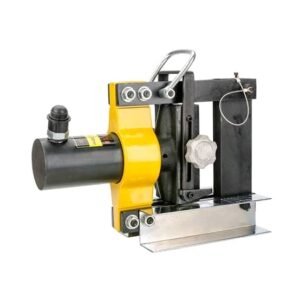
CB-150 Hydraulic Busbar Bender Price in Nigeria
The indicative price range for the CB-150 Hydraulic Busbar Bender in Nigeria is ₦280,000 to ₦300,000.
The final price may depend on the manufacturer, exact model, available accessories, warranty, and whether a hydraulic pump is included. Contact Donnel Tech Ltd to confirm the current price before placing an order.
CB-150 Hydraulic Bender Product Summary
– Product name: CB-150 Hydraulic Busbar Bender
– Product category: Hydraulic busbar bending tool
– Price in Nigeria: ₦280,000–₦300,000
– Typical bending angle: 0°–90° on many CB-150D models
– Typical maximum busbar width: Up to 150 mm
– Typical maximum busbar thickness: Up to 10 mm on many CB-150D models
– Main materials: Copper and aluminium busbars
– Hydraulic power: Compatible hydraulic pump, depending on the model
– Supplier: Donnel Technology Limited
– Location: Alaba International Market, Ojo, Lagos State, Nigeria
– Call/WhatsApp: 08103608430
Price note: ₦280,000–₦300,000 is the requested indicative price range for this listing. It is not a confirmed live quotation. Check the exact model, pump requirements, and included accessories with the supplier.
What Is the Bending Range of the CB-150 Hydraulic Bender?
The bending range describes the angles and material sizes that a bender can handle. For the CB-150, buyers should consider three main measurements: bending angle, busbar width, and busbar thickness.
1. Bending Angle: Approximately 0° to 90°
Many CB-150D hydraulic busbar benders are designed to bend busbars through angles from approximately 0° to 90°. This allows operators to make bends for electrical panels and switchgear assemblies.
The required angle depends on the layout of the electrical equipment. A project may need a small bend, a 45-degree bend, or a right-angle bend.
Some versions include an angle scale. This helps the operator monitor the bending angle during operation.
However, the angle scale is a guide. Measure the finished bend to confirm that it meets the project requirements.
2. Maximum Busbar Width: Up to 150 mm
Many CB-150D models are rated for copper or aluminium busbars up to 150 mm wide.
This capacity makes the tool useful for preparing busbars for distribution panels and industrial electrical equipment.
Do not assume that every busbar measuring 150 mm wide can be bent at every thickness. The allowed width and thickness must be checked together against the manufacturer’s specifications.
3. Maximum Busbar Thickness: Commonly Up to 10 mm
Many CB-150D models are designed to handle copper or aluminium busbars up to 10 mm thick.
Some manufacturers list different capacities, so this figure should be treated as a common specification rather than a guarantee for every CB-150-labelled tool.
A busbar that is too thick may place excessive load on the hydraulic system. It may also cause poor bends or damage the tool.
4. Bending Force
Some CB-150D models are listed with a bending force of around 16 to 20 tonnes. Other versions may have different ratings.
The bending force alone does not determine whether a tool can handle a particular busbar. The maximum width, thickness, material, bending angle, and manufacturer’s instructions must also be considered.
5. Hydraulic Pump Requirements
Many CB-150D models use a compatible external hydraulic pump. Examples of pump types listed for some versions include the CP-700 manual hydraulic pump and compatible electric hydraulic pumps.
Always check the required operating pressure, hydraulic action, oil flow, and connection type before connecting a pump.
Product references for the CB-150D show differences between model specifications. Check the exact manufacturer’s datasheet before purchase.
CB-150 Hydraulic Busbar Bender Datasheet
The table below gives common specifications reported for some CB-150D versions. It is a general reference, not a confirmed datasheet for every CB-150 tool.
Specification| Common CB-150D Details
Product type| Hydraulic busbar bending tool
Model reference| CB-150D
Main application| Copper and aluminium busbar bending
Maximum bending angle| Approximately 90° on many versions
Typical bending range| Approximately 0°–90°
Maximum busbar width| Up to 150 mm
Maximum busbar thickness| Commonly up to 10 mm
Bending force| Varies; some models list 16–20 tonnes
Hydraulic pump| Compatible external pump, depending on model
Angle control| Angle scale on some versions
Typical applications| Switchgear, distribution panels, control cabinets
Weight| Varies by manufacturer and accessories
Warranty| Confirm with supplier
Before purchasing, request the datasheet for the exact unit available from the supplier. Confirm the maximum width, thickness, bending force, working pressure, pump requirements, dimensions, weight, and accessories.
What Can the CB-150 Hydraulic Bender Be Used For?
The CB-150 is designed mainly for bending flat busbars used in electrical equipment. Its common uses include the following.
1. Copper Busbar Bending
Copper busbars carry electrical current in distribution boards and power systems. They may need to be bent to fit the layout of switches, breakers, and other electrical components.
The CB-150 can help shape suitable copper busbars within its rated capacity.
2. Aluminium Busbar Bending
Some CB-150 models can also bend aluminium busbars. The material size and bending method must match the manufacturer’s instructions.
3. Electrical Panel Production
Panel builders use busbars to distribute electrical power between components. The bender can help prepare bars for installation inside electrical cabinets.
4. Switchgear Manufacturing
Switchgear systems control and protect electrical circuits. Busbars may need to be bent to fit the internal layout.
The CB-150 can support these tasks when the required bend falls within its rated range.
5. Industrial Control Panels
Factories and industrial facilities use control panels to manage electrical equipment. A hydraulic bender can help prepare suitable busbars for these panels.
6. Electrical Maintenance
Maintenance teams may need to replace or modify busbars when repairing electrical equipment. The tool can help prepare replacement parts if they meet the machine’s specifications.
Always isolate the electrical system before carrying out maintenance.
Common Problems with the CB-150 Hydraulic Bender and How to Troubleshoot Them
Hydraulic benders can develop problems due to poor maintenance, incorrect setup, oil leaks, worn parts, or an unsuitable pump. The following steps can help identify common faults.
1. The Tool Cannot Reach the Required Bending Angle
The bender may stop before reaching the desired angle. It may also produce a bend that is too large or too small.
Possible causes:
– The busbar is positioned incorrectly.
– The material is too thick.
– The required angle exceeds the model’s range.
– The hydraulic pump does not provide the required pressure.
– The bending mechanism is worn or damaged.
Troubleshooting steps:
First, confirm that the required angle is within the tool’s rated range. Check that the busbar is correctly positioned and supported.
Make sure the material is within the permitted width and thickness. If the model has an angle scale, use it as a guide and measure the finished bend.
If the tool cannot reach the correct angle despite proper setup, stop using it and arrange a technical inspection.
2. The Bender Has Weak Hydraulic Force
The tool may struggle to bend a busbar or may stop moving under load.
Possible causes:
– Low hydraulic oil.
– Oil leakage.
– An incompatible pump.
– Worn seals.
– A busbar that exceeds the tool’s capacity.
Troubleshooting steps:
Check the oil level according to the pump manual. Look for visible leaks around hoses and connections.
Confirm that the pump matches the bender’s pressure and hydraulic requirements. Check that the busbar is within the rated capacity.
If the problem continues, ask a qualified technician to inspect the pump, valve, and cylinder. Never increase the pressure beyond the manufacturer’s limit.
3. Hydraulic Oil Is Leaking
Oil may leak from a hose, coupling, seal, or cylinder. A leak can reduce performance and create a safety risk.
Troubleshooting steps:
Stop using the tool if you find an active leak. Isolate the power source where applicable and follow the manufacturer’s procedure for releasing stored hydraulic pressure.
Inspect accessible parts for visible damage. Replace damaged components with correctly rated parts.
Never use your hand to find a high-pressure oil leak. Pressurised hydraulic oil can penetrate the skin and cause serious injury. Never disconnect a hose while the system is pressurised.
If the leak continues, seek help from a qualified hydraulic technician.
4. The Busbar Becomes Twisted During Bending
A busbar may twist or bend unevenly if it is not aligned correctly.
Possible causes:
– Incorrect positioning.
– Poor support.
– A damaged bending surface.
– Material outside the tool’s rated capacity.
– Uneven pressure on the workpiece.
Troubleshooting steps:
Stop the operation and check the busbar’s position. Make sure its centre line is aligned with the bending mechanism as directed by the manufacturer.
Check the support and positioning parts for wear or damage. Do not continue if the busbar keeps twisting.
If the finished busbar is cracked or badly deformed, do not assume it is safe for electrical use. Have it assessed and replace it if necessary.
5. The Busbar Gets Stuck in the Bender
A busbar may become difficult to remove after bending.
Possible causes:
– Incorrect positioning.
– Excessive bending.
– A damaged or dirty bending surface.
– Incorrect use of the release mechanism.
Troubleshooting steps:
Stop the operation and release the hydraulic pressure using the approved procedure. Keep your hands away from moving parts and pinch points.
Check for visible obstructions only when the tool is safe. If the model has an opening mechanism, use it according to the manual.
Do not hit the tool or force the busbar out with an improvised lever. Seek professional assistance if it remains stuck.
6. The Pump Makes Unusual Noise
A hydraulic pump may make unusual noise when the oil supply is low or the system is not working correctly.
Possible causes:
– Low oil level.
– Air in the hydraulic system.
– Incorrect oil.
– Restricted oil flow.
– Worn pump parts.
Troubleshooting steps:
Stop the pump if the noise is sudden, severe, or accompanied by overheating or vibration.
Check the oil level and follow the manufacturer’s maintenance instructions. Do not open hydraulic lines unless you are trained and the approved procedure permits it.
If the noise continues, arrange a professional inspection.
7. The Bending Mechanism Returns Slowly
The tool may not return smoothly after bending.
Possible causes:
– A problem with the return mechanism.
– A blocked hose.
– A faulty valve.
– A damaged cylinder.
– A mechanical obstruction.
Troubleshooting steps:
Release pressure according to the manual. Check for visible obstructions after the tool is safe.
Do not force the mechanism back into position. If it remains stuck or moves unpredictably, stop using the tool and contact a qualified technician.
8. The Busbar Has Cracks or Surface Damage
Cracks, deep marks, or unwanted deformation can affect the finished workpiece.
Possible causes:
– Excessive bending force.
– Incorrect material size.
– A damaged bending die.
– Incorrect positioning.
– An unsuitable bend for the material.
Troubleshooting steps:
Check the material dimensions and the tool’s capacity. Inspect the bending surfaces and positioning parts.
Do not exceed the rated limits. Do not try to correct a cracked busbar by bending it again. Have the part assessed and replace it if it does not meet the requirements for safe use.
Quick CB-150 Hydraulic Bender Troubleshooting Table
Problem| Possible Cause| Recommended Action
Incorrect bending angle| Wrong setup or excessive load| Check angle range and material size
Weak bending force| Low oil or pump issue| Check oil and pump compatibility
Oil leakage| Damaged hose or seal| Stop use and arrange safe repair
Twisted busbar| Poor alignment| Check positioning and support
Stuck busbar| Incorrect release procedure| Safely release pressure and follow the manual
Unusual pump noise| Low oil or internal fault| Stop if severe and seek inspection
Slow return| Valve or return mechanism fault| Stop and arrange repair
Cracked busbar| Excessive force or unsuitable material| Stop and assess the workpiece
Safety Tips for Using the CB-150 Hydraulic Bender
Hydraulic tools can operate under very high pressure. Safe operation is important.
– Read the manual before using the tool.
– Check the tool, pump, hose, and couplings before each job.
– Use only approved busbar sizes and materials.
– Do not exceed the rated hydraulic pressure.
– Keep hands clear of the bending area.
– Wear suitable protective equipment.
– Stop work if you notice a leak or unusual movement.
– Release stored pressure before maintenance.
– Never disconnect a pressurised hose.
– Use a qualified technician for internal hydraulic repairs.
How to Maintain the CB-150 Hydraulic Bender
Regular maintenance can help reduce breakdowns and improve working life.
Inspect before use: Check the frame, bending surfaces, hose, and couplings for visible damage.
Check hydraulic oil: Maintain the correct oil level and use the type specified by the pump manufacturer.
Keep the tool clean: Remove dirt and metal debris from accessible surfaces after use.
Inspect connections: Look for leaks and damaged couplings. Replace faulty parts with correctly rated components.
Avoid overloading: Do not bend material beyond the tool’s rated capacity.
Store it properly: Keep the tool in a dry, clean place. Protect the hose and couplings from damage.
Follow the service schedule: Use the manufacturer’s maintenance intervals and keep a record of repairs.
Where to Buy CB-150 Hydraulic Busbar Bender in Nigeria
If you want to buy the CB-150 Hydraulic Busbar Bender in Nigeria, contact Donnel Tech Ltd for product availability, pricing, and technical enquiries.
Donnel Tech Ltd supplies industrial tools and equipment for electrical installation, busbar processing, maintenance, and workshop applications.
Donnel Tech Ltd Contact Details
Distributor and supplier: Donnel Technology Limited
Website: “Donnel Tech Ltd official website” (https://reference-url-citation.invalid/1)
Call/WhatsApp: 08103608430
Shop address: F476, Industrial Section, Alaba International Market, Ojo, Lagos State, Nigeria.
Contact the supplier to confirm the current price, exact model, bending capacity, pump requirements, accessories, and warranty terms.
Delivery Enquiries for Buyers Across Nigeria
Buyers outside Lagos can contact Donnel Tech Ltd to ask about delivery arrangements to their state or city.
Enquiries are welcome from customers in Abia, Adamawa, Akwa Ibom, Anambra, Bauchi, Bayelsa, Benue, Borno, Cross River, Delta, Ebonyi, Edo, Ekiti, Enugu, Gombe, Imo, Jigawa, Kaduna, Kano, Katsina, Kebbi, Kogi, Kwara, Nasarawa, Niger, Ogun, Ondo, Osun, Oyo, Plateau, Rivers, Sokoto, Taraba, Yobe, Zamfara, and Lagos States, as well as the Federal Capital Territory, Abuja.
Confirm product availability, delivery costs, estimated delivery time, and payment arrangements before placing an order.
10 Related Products
CB-200 Hydraulic Busbar Bender, Hydraulic Busbar Cutting Machine, Hydraulic Busbar Punching Machine, 3-in-1 Busbar Processing Machine, ZCB-700D Hydraulic Electric Pedal Pump, CP-700 Hydraulic Hand Pump, CP-700A Hydraulic Pump, Hydraulic Cable Cutter, YQK-400 Hydraulic Crimping Tool, Hydraulic Hole Puncher.
30 SEO Tags
CB-150 Hydraulic Bender, CB-150 Bending Range, CB-150 Price Nigeria, Hydraulic Busbar Bender, Busbar Bender Nigeria, CB-150D Specifications, Busbar Bending Angle, Hydraulic Bender Troubleshooting, Busbar Tool Problems, Hydraulic Tool Repairs, Copper Busbar Bender, Aluminium Busbar Bender, Busbar Bending Machine, Hydraulic Pump Problems, Hydraulic Oil Leakage, Busbar Bender Maintenance, Busbar Tool Safety, Electrical Panel Tools, Switchgear Tools Nigeria, Busbar Processing Tools, Hydraulic Tools Lagos, Industrial Tools Nigeria, Hydraulic Bender Price, CB-150 Datasheet, Busbar Bending Range, Busbar Bender Supplier, Donnel Tech Ltd, Donnel Technology Limited, Alaba Market Tools, Hydraulic Bender Nigeria.
Full SEO Meta Description
Looking for the CB-150 Hydraulic Busbar Bender price in Nigeria? Learn its typical 0°–90° bending range, busbar capacity, common problems, and troubleshooting tips. Contact Donnel Tech Ltd on 08103608430 for product enquiries at Alaba International Market, Lagos, and delivery enquiries across Nigeria.
Meta Short Description
CB-150 Hydraulic Busbar Bender price in Nigeria: ₦280,000–₦300,000. Learn its bending range and troubleshooting tips. Call Donnel Tech Ltd on 08103608430.
Conclusion
The CB-150 Hydraulic Busbar Bender is useful for bending copper and aluminium busbars used in electrical panels, switchgear, and power distribution systems. Many CB-150D models support bending angles of approximately 0° to 90°, with a common capacity of up to 150 mm wide and 10 mm thick. However, these specifications vary by manufacturer and model, so buyers should confirm the exact datasheet before use.
Common problems include weak hydraulic force, oil leakage, inaccurate bends, twisted busbars, and difficulty releasing the workpiece. Correct setup, regular maintenance, compatible hydraulic equipment, and operation within the rated limits can help prevent many of these problems.
The requested indicative price in Nigeria is ₦280,000 to ₦300,000. For enquiries, contact Donnel Technology Limited on 08103608430 or visit F476, Industrial Section, Alaba International Market, Ojo, Lagos State, Nigeria. Buyers across Nigeria can contact the supplier to confirm availability and discuss delivery arrangements.